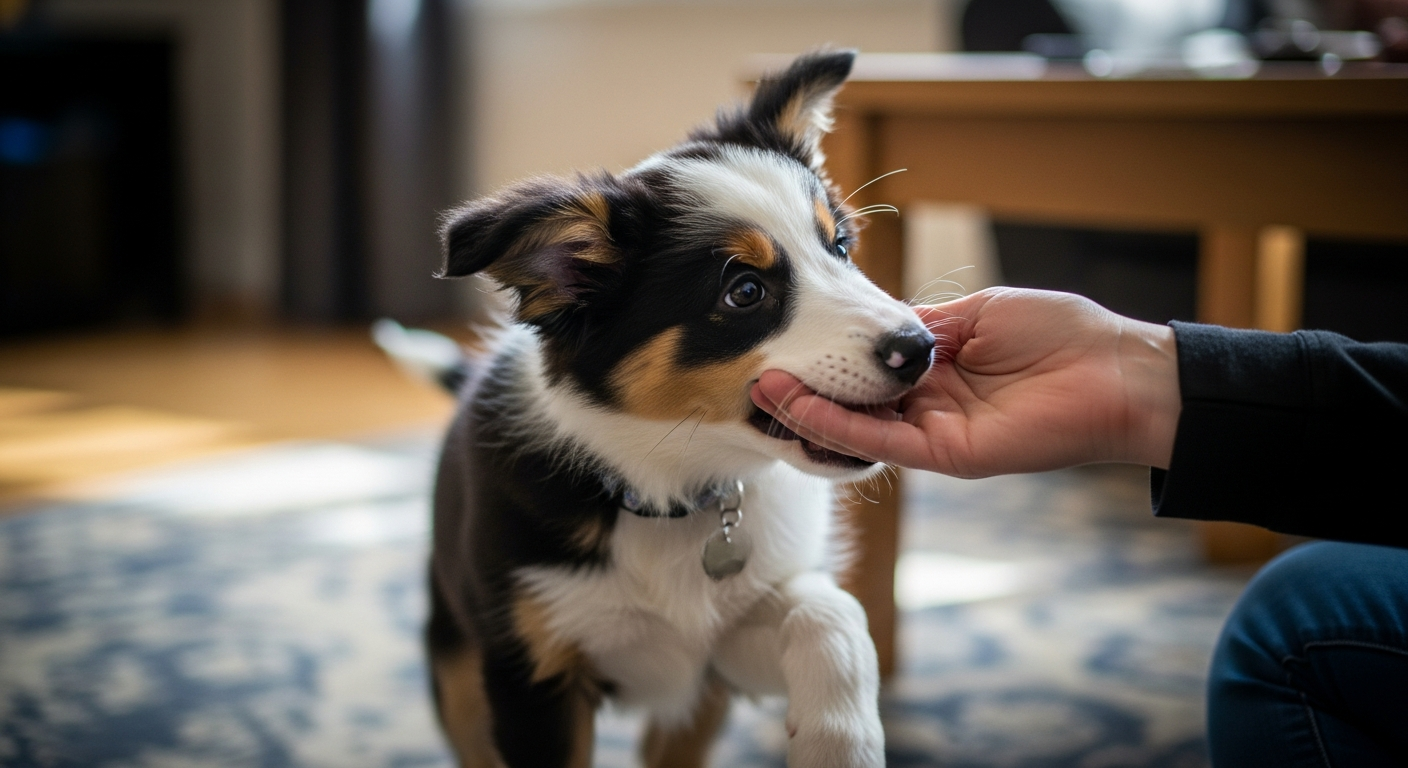
Bite Inhibition Training: Teaching Your Puppy Gentle Mouth Control
Puppies learn about the world through their mouths. Learn how to teach your puppy bite inhibition—the essential skill that helps them control their mouth pressure and keeps everyone safe.
You're on the floor of your living room, wrestling with your new puppy when all of a sudden, chomp. Those tiny teeth sink into your finger with more pressure than you expected. If you're wondering whether this is normal, the answer is yes.
Puppies learn about the world through their mouths, and while they might be trying to tell you they love you with those little nips, this is their way of learning. Still, it's up to you to help them figure out the difference between a gentle nibble and a painful nip, especially if you are a breeder with multiple puppies or you just got a puppy and have small children.
Let's discuss bite inhibition, what it is, why it's important, and how to teach it properly.
What Is Bite Inhibition, and Why Should You Care?
Bite inhibition is basically your puppy knowing how much pressure to use with their mouth. It's like their own personal brakes and what prevents a mouth from becoming dangerous. When puppies are still with their litter and they play and wrestle together, they learn a lot about cause and effect. For example, if one puppy bites too hard, the other will yelp sharply, and the game will stop immediately. Simple and effective.
That early education teaches puppies how to control their biting pressure. However, when they've gone to their forever homes, this education must continue—but with a different teacher. It's your turn to take over.
Bite inhibition doesn't mean your dog will never mouth you; it means that if your puppy mouths you or another person, it will do so with controlled intent, which can save an injury or worse in the future. Think of an adult dog who snaps at a stranger at a vet's office or a dog being handled by an unsuspecting child. An educated dog knows how to bite softly—and even if they accidentally do it harder than intended, the likelihood of injury is significantly decreased.
When and How to Start Teaching Bite Control
If your puppy is already bouncing around your house with those needle-like teeth, then you're right on cue. The sweet spot to begin bite inhibition training is as early as eight weeks old—the moment they've settled into your home and started exploring life outside the whelping pen. That said, don't stress if you've got a ten- or twelve-week-old on your hands. It's not too late. In fact, it's never too late to nudge your pup in the right direction.
Here's the thing, this isn't a once-off fix. Bite inhibition needs regular, consistent teaching, like brushing your teeth or tying shoelaces. Puppies don't just "get it" overnight. You're going to repeat, reset, and reinforce the same simple patterns over the next few weeks until it sticks.
And it will stick, so long as everyone in the household plays by the same rules. If one person is okay with roughhousing and finger nibbles, while another yells and pulls away, your pup will end up confused and unsure of the boundaries. Dogs, just like kids, thrive on steady feedback. No mixed messages.
Step-by-Step Training Methods
1. Swap Teeth for Toys
First things first, don't treat nipping like a crime scene. Your pup's not being rude; they're doing what nature wired them to do. Teething, playing, exploring, it all happens through their mouth. So instead of scolding, redirect. Keep a soft chew toy or rubber puppy bone within arm's reach. The moment your dog starts to nip, gently pull away and offer a toy instead. Praise them when they chew on the toy.
2. The "Ouch and Pause" Approach
This one's old-school, but it works wonders. Let's say your pup goes in for a chomp. You let out a firm, but not scary, "Ouch!" Then stop all play and pull your hand back. Freeze. Don't yank away. Don't squeal and run. Just stop. The goal is for them to see that this sort of biting is not fun and you're resetting the mood. Most pups will catch on that the fun ends when they get bitey.
3. Time-Outs for Repeat Offenders
If your dog keeps coming back with its teeth bared, it might be good to have a short break. Lead them gently to a calm, safe space, and give them a minute or two to cool down. Once they settle, you can bring them out and try again. Repeat this until they realize that gentle gets them attention and rough gets them a time out.
4. Celebrate Soft Mouthing
This is something that is often forgotten but it's as important as correcting the bad stuff. If your pup mouths you gently without pressure or refrains from using their teeth, you can praise them and give them a treat. Make sure you reward them when they successfully control their bites.
Additional Tips for Smoother Training
Let Them Mingle with Their Own Kind
Puppies are great teachers for each other. Letting your pup romp around with other well-mannered puppies (or gentle older dogs) can help reinforce what's okay and what's pushing it. If one puppy bites too hard during play, the game usually stops cold. That's a lesson they remember.
Enrol in a Good Puppy Class
Group training sessions aren't just about sit, stay, and shake. A good puppy preschool also gives your dog the chance to learn bite restraint in a structured setting. Plus, you get to see what's working and what might need a tweak. It's also a great way to connect with other dog owners who are going through the same nipping issues.
"Proper training early on sets the foundation for a lifetime of trust, safety, and happiness for both you and your dog," says Nathan from Pet Memorial Australia.
Know When to Call in a Pro
If your puppy's biting still continues to increase instead of mellowing out, and they're showing signs of fear and guarding behaviour, it might be dangerous to deal with on your own. A certified trainer can help you spot things you might miss and get training on track before things get out of hand.
Conclusion
Bite inhibition isn't taught overnight. It's a slow burn, built on patience, repetition, and lots of encouragement. But if you hang in there and stay consistent with your approach, you're not just stopping a bad habit, you're shaping a safer, more reliable adult dog. One that knows their strength, can play without causing harm, and has learned to trust your guidance.