Ozempic for Dogs? Here's What Every Dog Owner Should Know About Pet Weight Loss Drugs
With 59% of U.S. dogs overweight or obese, pharmaceutical companies are racing to develop GLP-1 weight loss drugs for pets. Here's what's in the pipeline and what you can do right now.
If you've heard of Ozempic — and at this point, who hasn't — you might be surprised to learn that the weight loss drug revolution is making its way to the veterinary world. With pet obesity reaching epidemic proportions, pharmaceutical companies are now racing to develop GLP-1 weight loss drugs specifically designed for dogs and cats.
But before you even think about sharing your prescription with your pup, here's everything you need to know about where things stand — and what you can do right now to help your dog live a longer, healthier life.
The Pet Obesity Epidemic Is Worse Than You Think
Let's start with the numbers, because they're staggering. According to the Association for Pet Obesity Prevention (APOP), 59% of dogs in the United States are classified as overweight or obese. That's not a typo — more than half of all pet dogs are carrying unhealthy extra weight.
And the consequences are serious. A landmark study published in the Journal of Veterinary Internal Medicine, conducted by researchers at the University of Liverpool and Mars Petcare's Waltham Centre, analyzed records from over 50,000 dogs and found that overweight dogs live up to 2.5 years shorter than dogs at a healthy body weight. The reduction was seen across all 12 breeds studied, from five months shorter for German Shepherds to a full 2.5 years for Yorkshire Terriers.
Here's another eye-opener: Minnesota has the highest dog obesity rate in the nation at 41% — so if you're a dog owner in the Twin Cities, this one hits close to home. Sterilized dogs are three times more likely to become obese, and research shows that pets with overweight owners are twice as likely to be overweight themselves.
In short, pet obesity is a full-blown health crisis. So it's no wonder the pharmaceutical industry is paying attention.
What's Actually Being Developed: Meet "Ozempup"
The buzz around "Ozempic for pets" isn't just internet speculation — real clinical programs are underway. The most notable is a collaboration between Vivani Medical and Okava Pharmaceuticals, who are developing a product called OKV-119.
Here's how it works: OKV-119 uses Vivani's NanoPortal™ implant technology to deliver a GLP-1 receptor agonist — the same class of drug as Ozempic — through a small implant placed under the dog's skin. The implant releases steady doses of medication for six months or longer, making it a potential "one-and-done" solution for pet weight management.
"Caloric restriction is one of the most well-established interventions for extending the lifespan and improving metabolic health in dogs. But it is also one of the hardest to maintain," said Dr. Michael Klotsman, CEO of Okava Pharmaceuticals. "OKV-119 mimics many of the physiological effects of fasting — improved insulin sensitivity, reduced fat mass, and more efficient energy metabolism — without requiring significant changes in feeding routines or disrupting the human-animal bond that often centers around food."
The program initially focused on cats (under the playful project name "MEOW-1"), but expanded to dogs in 2025 given the massive scope of canine obesity. The companies have also coined the informal terms "Ozempets" and "Ozempup" — and yes, those names are as delightful as they sound.
Why You Should NOT Give Your Dog Human Ozempic
This is the most important section of this article, so we're going to be very clear: Do not give your dog Ozempic, Wegovy, Mounjaro, or any other human GLP-1 medication.
Here's why:
- Semaglutide (Ozempic's active ingredient) has never been formally studied in dogs. We simply don't know the safe dosage, potential interactions, or long-term effects.
- Dogs metabolize drugs differently than humans. What's a therapeutic dose for a person could be toxic to a dog's liver, kidneys, or digestive system.
- GLP-1 drugs suppress hunger and slow digestion. For animals who can't choose when or what they eat, this could lead to chronic discomfort, nausea, or even dangerous malnutrition.
- In humans, Ozempic carries risks of pancreatitis and thyroid cancer. These risks haven't been evaluated in dogs at all.
- There are already reported cases of pets given human weight loss drugs experiencing severe vomiting, diarrhea, dangerously low blood sugar, and emergency veterinary visits.
Bottom line: these drugs need to be specifically formulated, dosed, and tested for dogs before they're safe. That's exactly what companies like Okava are working on — but we're not there yet.
A Brief History of Dog Weight Loss Drugs
Believe it or not, there was an FDA-approved weight loss drug for dogs. In January 2007, the FDA approved dirlotapide, marketed as Slentrol by Pfizer. It worked by reducing fat absorption and suppressing appetite in dogs that were at least 20% overweight.
But Slentrol never gained widespread adoption. The drug required careful veterinary monitoring, had side effects including vomiting and diarrhea, and the weight loss was temporary — dogs regained weight after stopping the medication. Only one research paper has been published on the drug since its initial approval.
The hope is that new GLP-1-based treatments like OKV-119 will be more effective and longer-lasting. But as the Slentrol story shows, developing safe and effective weight loss drugs for pets is genuinely challenging work.
What You CAN Do Right Now
While we wait for veterinary weight loss drugs to complete clinical trials, the good news is that the most effective tools for managing your dog's weight are already available — and they don't require a prescription.
1. Talk to Your Vet About Your Dog's Body Condition Score
Veterinarians use a Body Condition Score (BCS) on a scale of 1-9 to assess whether your dog is underweight, ideal, or overweight. Ask your vet to show you how to evaluate your dog's BCS at home — you should be able to feel (but not see) your dog's ribs, and they should have a visible waist when viewed from above.
2. Measure Meals (Yes, Every Time)
Eyeballing portions is one of the top reasons dogs gain weight. Use a measuring cup or kitchen scale, and follow your vet's recommended daily calorie intake — not just the guidelines on the bag, which are often too generous.
3. Cut Back on Treats
Treats should make up no more than 10% of your dog's daily calories. Swap high-calorie biscuits for baby carrots, blueberries, or small pieces of apple. Your dog will be just as thrilled — trust us.
4. Get Moving Together
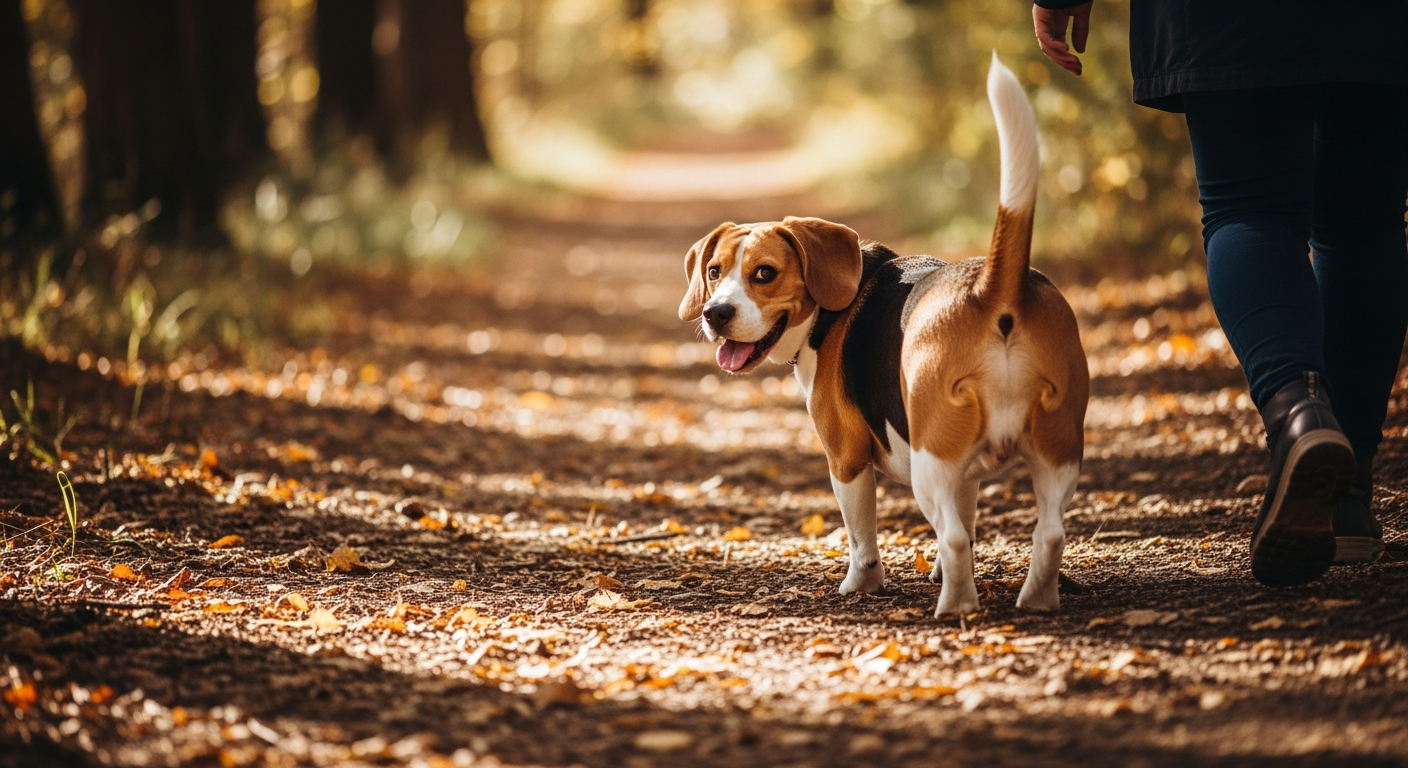
Regular exercise isn't just good for your dog's waistline — it's good for yours, too. Aim for at least 30 minutes of activity daily, whether that's a brisk walk, a game of fetch, or exploring a dog-friendly trail or park in your city. Start slow if your dog is significantly overweight, and build up gradually.
5. Consider a Weight Management Diet
Prescription weight management diets are formulated to help dogs feel full while consuming fewer calories. Your vet can recommend the right formula for your dog's breed, age, and health status.
What's Coming Next
The pet weight loss drug pipeline is more active than it's ever been. With the 2026 APOP Prevalence Survey registration now open and major pharmaceutical partnerships like Vivani-Okava advancing through development, we could see the first GLP-1-based weight loss treatments for dogs reach veterinary clinics within the next few years.
When they do arrive, they'll likely be used as part of a comprehensive weight management plan — not as a standalone miracle cure. Just like in humans, the most successful approach will combine medical intervention with lifestyle changes.
In the meantime, the best thing you can do for your dog is simple: talk to your vet, measure those meals, and get outside together. After all, a walk with your best friend is one prescription that never needs refilling.
At Sidewalk Dog, we're all about helping you and your pup live your best lives together — from finding dog-friendly spots in your city to keeping you up to date on the latest in dog health and wellness. Got a question or a topic you'd love us to cover? Drop us a line — we're all ears (and paws).

About the Author
Jared McKinney
Founder & Editor
Jared knows how to sit, stand, and play dead. At Sidewalk Dog he fetches everything from articles, to emails, to weekly newsletter trivia questions for dog owners.
Recommended Articles

75 Million Americans Are Skipping Vet Visits Because of Cost — Here's How to Get Your Dog the Care They Need
April 10, 2026

Vets Say 2026 Could Be the Worst Spring Allergy Season Yet for Dogs — Here's How to Help
April 7, 2026
New Research Warns Millions of Dogs Are at Risk From Copper in Their Food — Here's What to Know
April 6, 2026

Experts Warn 2026 Could Be the Worst Tick Season Yet for Dogs — Here's How to Protect Yours
April 4, 2026