Dog Daycare vs. Day Training: Which One Fits Your Pup's Week?
Should you book daycare or sign up for day training? Both solve different problems. Learn which option fits your dog's temperament, your goals, and how to plan a week that helps your pup thrive.
You've got a busy calendar, a smart dog, and a nagging question: should you book daycare or sign up for day training? Both can be great, but they solve different problems. Choosing the right one comes down to your dog's temperament, your goals, and how much coaching you want as the owner. Let's break this down so you can plan a week that actually helps your dog thrive—not just burn energy.
What "Dog Daycare" Really Delivers
Think of daycare as structured recess. Good programs group dogs by size or play style, keep ratios tight, and rotate play with rest so arousal doesn't spike all day. Dogs that enjoy other dogs get exactly what they need: controlled social time, novelty, and chances to practice canine etiquette. For many friendly, resilient dogs, that's gold—especially if your workday is long and your neighborhood walks don't offer much social contact. Veterinary organizations consistently encourage positive, well-managed social exposure because it supports behavioral health when it's done thoughtfully and at a dog's pace.
Daycare isn't a training shortcut, though it can complement training by giving your dog safe, supervised reps at polite greetings, sharing space, and settling after play. If your schedule is tight, some owners like to pair a weekday daycare routine with weekend dog training so the dog gets high-quality learning plus time to just be a dog with friends. The result: a calmer Monday and measurable progress you can maintain at home.
What "Day Training" Actually Means
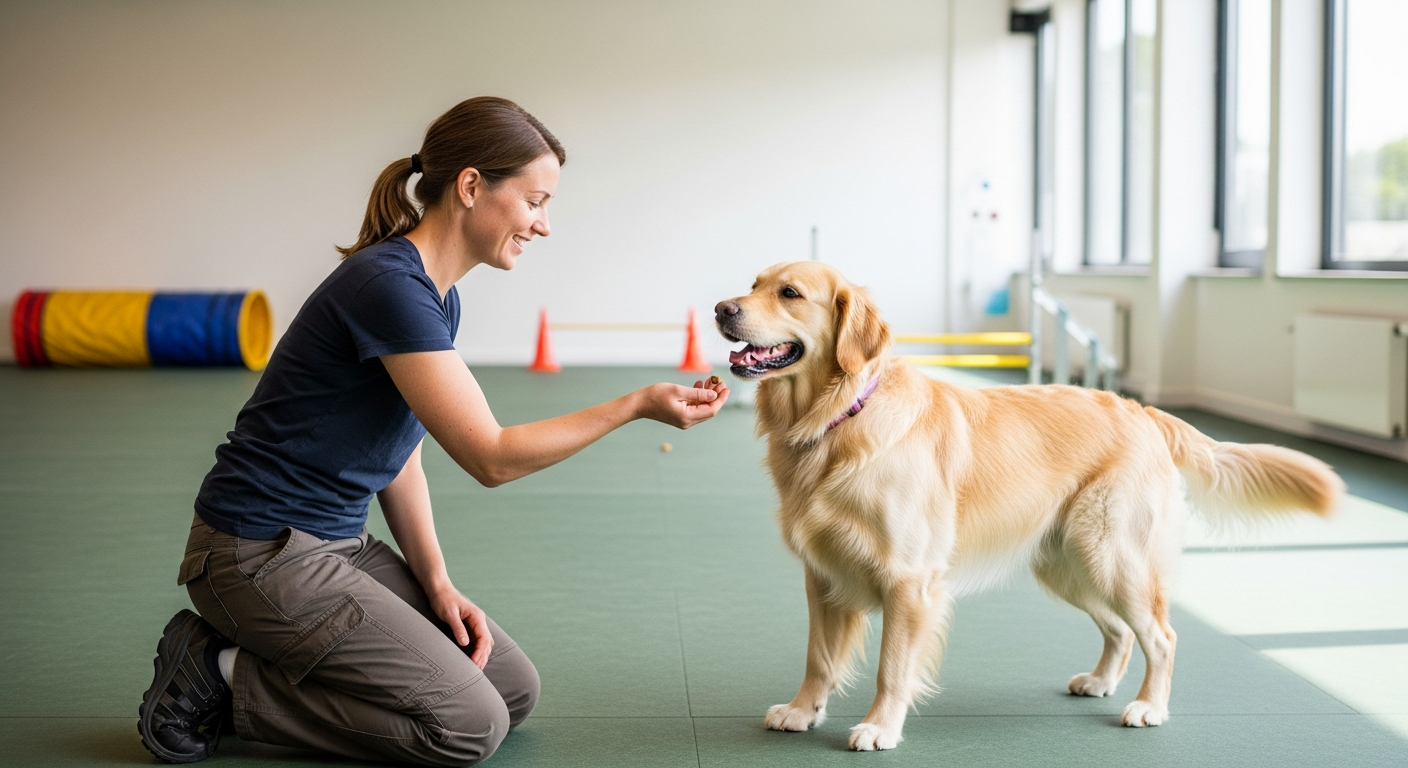
Day training is education-first. Your dog spends blocks of the day working one-on-one with a professional and then decompressing between sessions. The curriculum is built around teachable skills—loose-leash walking, recall, polite doorways, settling on a mat—plus problem-solving for everyday friction points like jumping on guests or pulling toward other dogs. Reputable programs use reward-based methods (food, toys, life rewards) because they teach quickly and protect welfare; that's the consensus among veterinary behavior bodies reviewing the evidence.
The not-so-secret ingredient in day training is the transfer session. You need time with the trainer to learn the cues, timing, and reinforcement patterns so your dog generalizes skills to you, your home, and your routes. Without that handoff, gains stall. A good week pairs 2–3 training days with owner coaching and simple at-home reps (think five-minute "micro-sessions" before meals). That rhythm teaches your dog and builds your fluency so progress sticks.
Which Dogs Do Best in Daycare?
Social, confident dogs that read other dogs well. If your dog plays politely, recovers quickly from excitement, and can nap between play windows, daycare can be a healthy outlet. It's also useful for puppies beyond their initial vaccination series when introduced thoughtfully; early positive exposure to new people, dogs, and environments reduces the risk of later fear-based problems. The key word is positive—go at your dog's pace and let them withdraw when they're done.
Daycare can also help dogs who are under-stimulated at home and turn that boredom into nuisance behaviors. That said, if your dog is overwhelmed by groups, resource guards toys, or fixates on certain dogs, full-day social play may not be fair to them (or others). Those dogs benefit more from targeted training, smaller play groups, or short, structured "enrichment" blocks with decompression walks instead of high-arousal yard play.
Which Dogs Do Best in Day Training?
Dogs with specific goals: reliable recall, loose-leash walking on busy sidewalks, calmer door greetings, better crate comfort, or skills for cafe patios and elevators. It's particularly effective for dogs who struggle in open-play environments—over-aroused adolescents, worry-prone dogs, or those rehearsing reactivity on leash. Reward-based protocols let trainers break behaviors into small wins, mark correct choices, and gradually add distractions so the dog learns without fear. That approach is strongly recommended by veterinary behavior authorities because it minimizes risk of fallout (like increased anxiety or aggression) while producing durable learning.
If you're weighing day training against classic board-and-train, consider your role. Board-and-train offers immersion but still depends on what you do when the dog comes home. Day training keeps you closely involved throughout the week, making it easier to maintain the new habits where they matter—your sidewalks, your lobby, your living room.
Cost, Time, and Outcomes—Making a Week That Works
Daycare usually prices like childcare: by the day or package, sometimes with half-day options. Day training often costs more per session because it includes skilled 1:1 trainer time and owner coaching. When you compare, think in terms of outcomes:
- If your dog is friendly and your main need is safe social outlet while you work, daycare wins for value.
- If your main need is behavior change or reliable skills under distraction, day training typically returns more per dollar because the plan targets those outcomes directly and transfers the skills to you.
A smart weekly combo for many city and suburban dogs is two training days, one daycare day, and the rest owner-led life practice: short training bursts before meals, calm leash exits, one focused recall session in a quiet park, and a decompression sniff walk. That mix keeps arousal balanced and moves goals forward without burning either of you out.
Red Flags and Green Lights
Regardless of which path you choose, vet the provider. You're looking for transparent methods and a plan you can actually sustain at home.
Green lights:
Trainers who explain their reward-based approach and how they'll fade food toward real-life rewards (access to the elevator, greeting a friend, sniffing a bush). Programs that schedule transfer sessions routinely. Daycares that run structured play/rest cycles, enforce kind handling, and give candid feedback when your dog needs a break. These align with veterinary behavior guidance favoring humane, reinforcement-focused training and thoughtful social exposure.
Red flags:
Anyone leaning on "quick fixes," vague jargon, or tools that rely on pain or fear without informed discussion of risks. It's not just a preference issue; major veterinary behavior organizations warn that aversive techniques can compromise welfare and create new behavior problems.
How to Decide in 5 Minutes
- List your top two outcomes. "No pulling to the crosswalk" and "calm when guests arrive" point to day training; "happy, tired, friendly dog on long office days" points to daycare.
- Match to temperament. Social butterfly? Daycare or mixed plan. Easily overwhelmed or rehearsing reactivity? Training-first with controlled exposures.
- Commit to transfer. If you can't attend owner sessions or practice 10 minutes a day, adjust expectations now and choose the simpler plan until life calms down.
A Week-in-the-Life Example
Milo, 9-month-old mixed breed, pulls like a freight train and explodes into barking at skateboards. He likes dogs but gets too aroused after 10 minutes of play.
- Monday: Day training—loose-leash mechanics in a low-traffic block; decompression sniff walk; settle-on-mat with a stuffed chew.
- Wednesday: Owner transfer session—handler timing on the first 20 feet out the door (where pulling starts), pattern games near the corner where the bus whooshes by.
- Friday: Half-day daycare—small group with a rest nap, then a calm handoff to the owner.
- Weekend: One 12–15 minute proofing session focused on recall away from a mild distraction and a quiet trail walk.
By week three, Milo isn't perfect, but the exits are smooth, and the skateboard explosions have dropped to a manageable head turn and cookie. That's success you can feel.
The Bottom Line
Pick the format that matches your primary goal, then protect the handoff so skills live at home. Daycare is great social mileage for dogs who enjoy it; day training is targeted education with owner coaching. If your week blends both, keep arousal balanced, practice short and often, and stick with reward-based methods backed by veterinary behavior guidance. Your dog doesn't need more hours—they need the right hours.